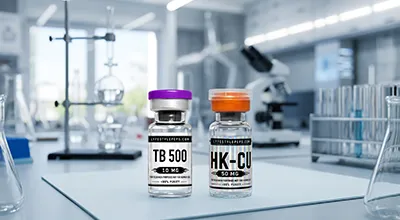
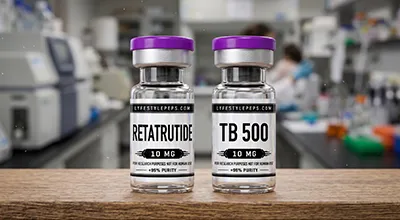
Traceability is what turns a quality claim into verifiable evidence. At Lifestyle Peptides, every compound can be followed from its synthesis record through purification data, identity testing, and independent lab attribution, all the way to a lot matched Certificate of Analysis.
This continuous chain of documentation means researchers are never asked to simply trust a general assurance about product quality. Instead, each stage of production leaves a verifiable record, enabling researchers to trace a compound’s full history before relying on it in their own work, every single time.
Documented Synthesis Record Details
Every research peptide produced by Lifestyle Peptides is tied to a synthesis record documenting the key parameters of its production, including the target sequence, the synthesis method used, and the coupling and deprotection cycles applied throughout solid phase peptide synthesis. This record exists as the starting point of the compound’s full documentation chain, establishing exactly what was intended to be built before purification, testing, or packaging ever takes place. Maintaining a synthesis record is not simply an internal manufacturing practice. It creates a reference point against which later analytical data, including identity confirmation and purity testing, can be checked, helping confirm that the finished compound matches what the synthesis process was designed to produce.
For researchers relying on Lifestyle Peptides as a supplier, this record represents the earliest link in a traceability chain that continues through every subsequent stage of production. Rather than treating synthesis as a black box step disconnected from subsequent quality checks, Lifestyle Peptides maintains documentation that links the finished, tested compound directly to the specific process that produced it, providing transparency that researchers can reference when evaluating supplier reliability. This applies consistently to every compound produced.
Purification Data and Records
Purification data generated during RP-HPLC processing forms a critical part of each compound’s documentation chain. This data documents how the target peptide was separated from synthesis byproducts, such as truncated sequences and oxidation products, and establishes the analytical foundation later used to confirm final purity. Because the same RP-HPLC methodology used for purification is also applied during final purity testing, this stage of documentation creates a direct, traceable link between how a compound was cleaned and how its quality was ultimately measured.
Lifestyle Peptides retains this purification data as part of each batch’s complete record, ensuring that researchers reviewing a Certificate of Analysis see results connected to a documented, verifiable purification process rather than an unexplained final specification each time.
Confirmed Compound Identity Testing
Identity testing confirms that the compound produced matches the intended sequence, using liquid chromatography-mass spectrometry to verify molecular identity independently of the synthesis process. This step is performed on every batch before release, not selectively or on a sampling basis.
For a researcher, identity testing answers the most basic question a Certificate of Analysis needs to address: is this vial actually the compound it claims to be? Lifestyle Peptides treats this as a non negotiable part of every batch’s documentation.
Named Independent Testing Laboratory
A Certificate of Analysis is only as credible as the laboratory that generated it, which is why Lifestyle Peptides identifies the independent third-party testing laboratory by name on every batch document. Attribution matters because it allows researchers to evaluate the credibility of the testing source directly, rather than relying on an anonymous or unnamed lab reference that cannot be independently verified. Named lab attribution also creates accountability throughout the testing process, since results are tied to a specific, identifiable laboratory rather than an internal or unspecified testing function.
This transparency reflects a broader principle that applies across the entire Lifestyle Peptides documentation framework: every claim about a compound’s purity or identity should be traceable back to its source. Researchers evaluating suppliers are encouraged to look for this specific kind of named lab attribution, since its absence often indicates that the testing documentation cannot withstand closer scrutiny. Lifestyle Peptides includes this attribution on every Certificate of Analysis, without exception, so that researchers reviewing documentation always know precisely which laboratory generated the purity and identity data for their compound. This naming convention remains consistent across all Certificates of Analysis issued today.
Lot-Matched Certificate of Analysis
The final link in the documentation chain is a Certificate of Analysis matched specifically to the batch or lot number on the vial a researcher actually receives. This lot matching is what separates verifiable, batch specific documentation from a general product specification sheet that could apply to any production run.
Each Certificate includes HPLC purity data, LC-MS identity confirmation, the batch lot number, the date of analysis, and the identifying information of the testing laboratory, giving researchers a complete, traceable record tied directly to the compound in their possession, each time.