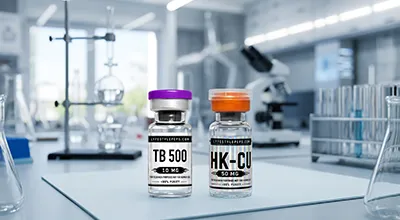
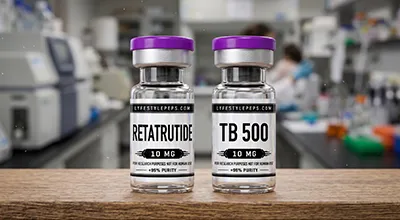
Quality at Lifestyle Peptides is not a claim printed on a label. It is a standard applied consistently from raw material selection through synthesis, purification, testing, and final packaging. Every compound supplied is expected to meet the same benchmarks for purity and identity, regardless of order size or product type.
This consistency allows researchers to treat each vial as a known, dependable starting point for their work, rather than something that needs to be independently verified before use in a laboratory setting, regardless of order size.
Careful Raw Material Selection
Quality begins well before synthesis, with the selection of raw materials used to build each research peptide. The amino acids, protecting groups, and reagents used in solid phase peptide synthesis all contribute to the final purity and identity of the finished compound, which means inconsistent or poorly sourced starting materials can introduce problems that no amount of downstream purification can fully correct. Lifestyle Peptides applies defined sourcing standards to the raw materials used in its supply chain, recognizing that the foundation of a high-quality research compound is established at this earliest stage of production.
This attention to raw material quality is not visible in a finished vial, but its effects are measurable in the purity and identity data generated later in the process. Suppliers who treat this stage casually often see the consequences appear downstream, in inconsistent batches or higher rates of synthesis byproducts. By maintaining consistent standards for raw material selection, Lifestyle Peptides reduces variability before it can compound in later stages of production, supporting the kind of batch to batch consistency that researchers depend on when designing and interpreting laboratory experiments. This foundation reliably supports every later stage of production.
Controlled, Repeatable Synthesis Process
Every research peptide is synthesized under controlled conditions using solid phase peptide synthesis, a method chosen because it allows precise, repeatable construction of a target sequence. Each coupling and deprotection cycle is carried out under defined conditions, minimizing the variability that can otherwise introduce truncated sequences or other synthesis byproducts into the crude product.
Controlled synthesis does not eliminate the need for later purification and testing, but it does reduce the burden placed on those downstream steps by producing a cleaner starting material in the first place. Lifestyle Peptides treats synthesis control as a quality measure in its own right, not a manufacturing formality, because the conditions under which a peptide is built directly influence how consistent the finished compound will be.
Independent Third-Party Lab Testing
Quality claims are only meaningful when they are verified by someone other than the manufacturer. Every compound supplied by Lifestyle Peptides is tested by an independent third party laboratory, separate from the synthesis and purification process itself. This independence matters because it removes any incentive to interpret ambiguous results favorably.
Researchers reviewing a Certificate of Analysis from Lifestyle Peptides are looking at data generated by a lab with no stake in the outcome, a meaningful distinction when documentation is used for research purposes for every batch tested.
Strict Minimum Purity Threshold
Every research peptide supplied by Lifestyle Peptides meets a minimum purity threshold of 98 percent by HPLC area percentage, a standard consistent with industry recognized research grade quality. At this level, at least 98 parts in every 100 of the UV-absorbing material in a sample represent the target compound itself, with the remainder accounted for by known synthesis byproducts rather than unexplained contamination. Many batches supplied by Lifestyle Peptides are verified at 99 percent purity or higher, offering an additional margin for researchers whose applications require particularly precise quantitation.
This purity threshold is not an aspirational target mentioned in marketing materials. It is a measurable checkpoint applied to every batch before that batch is approved for release, using the same RP-HPLC methodology referenced throughout the supply and testing process. Compounds that fall short of this threshold are not supplied under the Lifestyle Peptides name, regardless of how minor the shortfall might appear. This threshold exists because purity directly affects the reliability of any experimental result obtained using the compound, and researchers deserve a supplier that treats it as a firm requirement rather than a flexible guideline.
Certification Tied to Batch
Quality assurance at Lifestyle Peptides is applied at the batch level, not the product level. Each production lot receives its own Certificate of Analysis, generated from testing performed specifically on that batch rather than a representative sample from an earlier or unrelated run.
This batch specific approach means the documentation a researcher receives reflects the exact material in their possession, not a general assurance about the product line as a whole. It is this level of specificity that gives batch certification real value in a research setting, without any exception.